
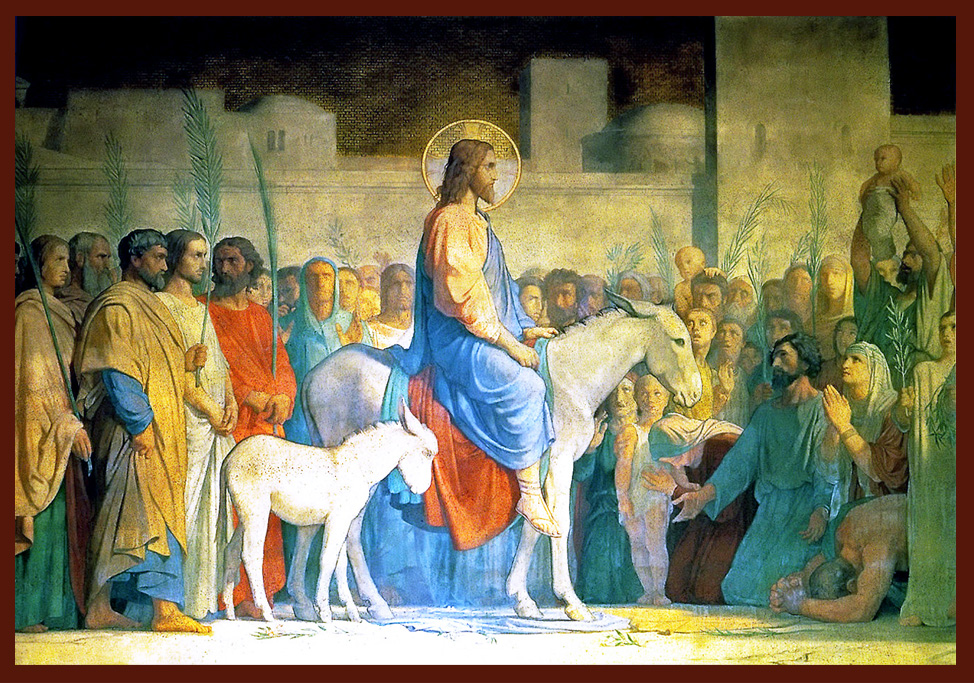
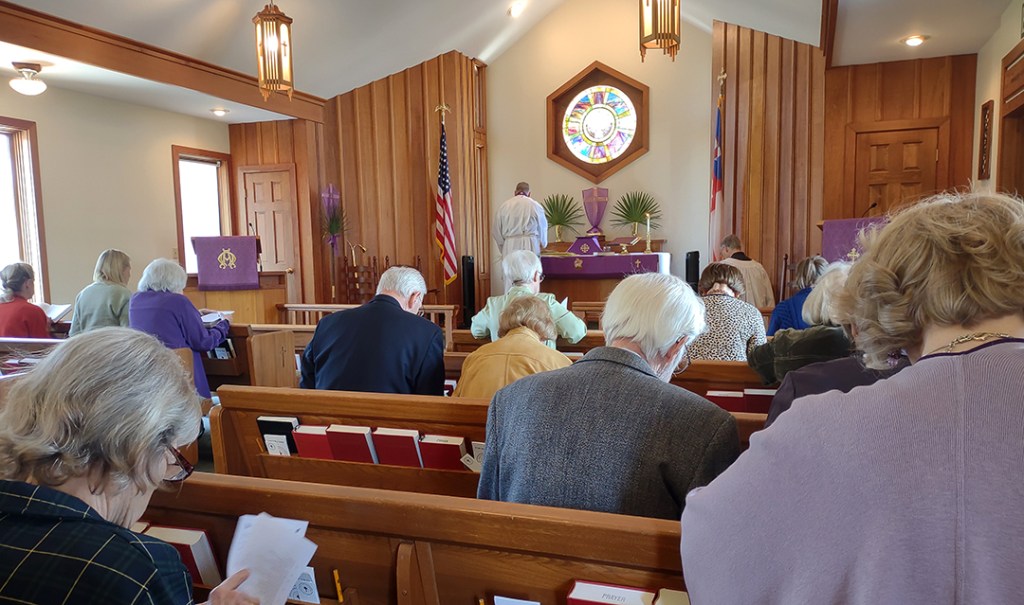
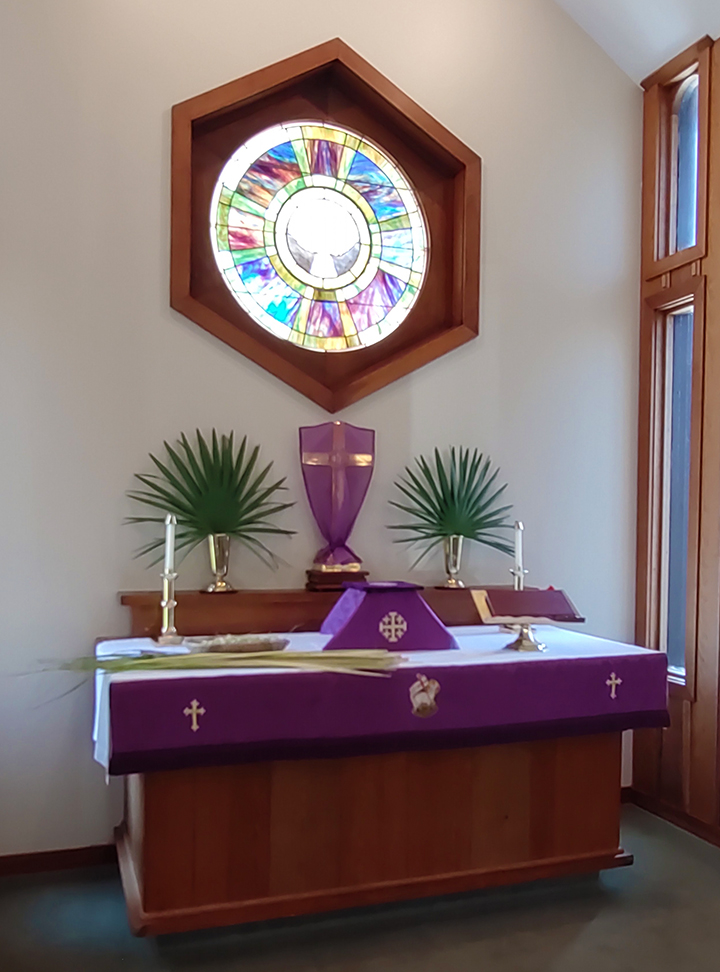
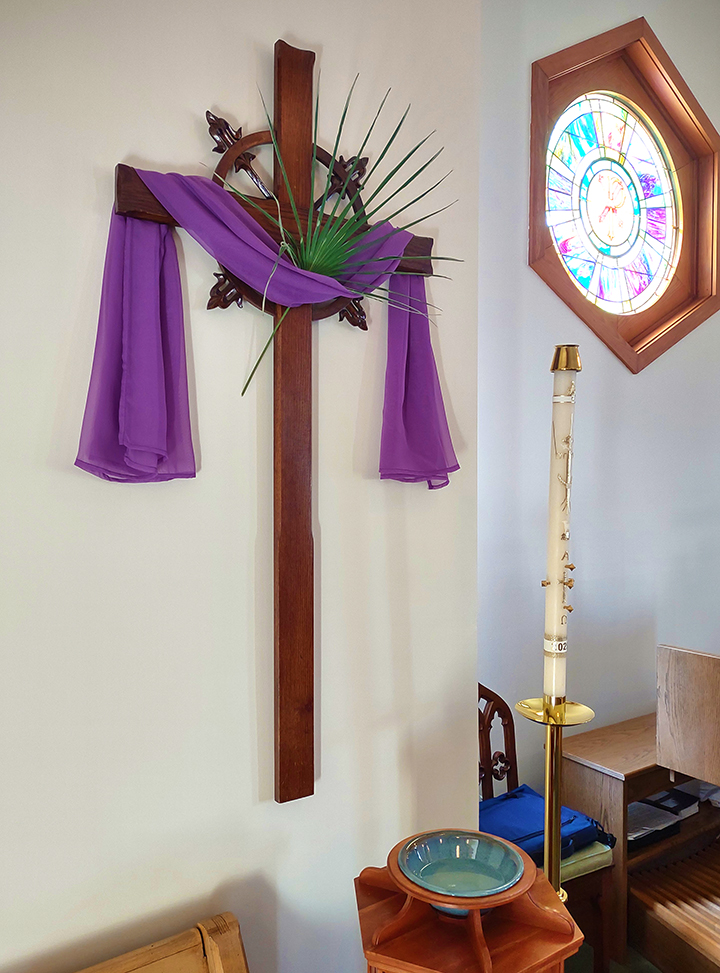
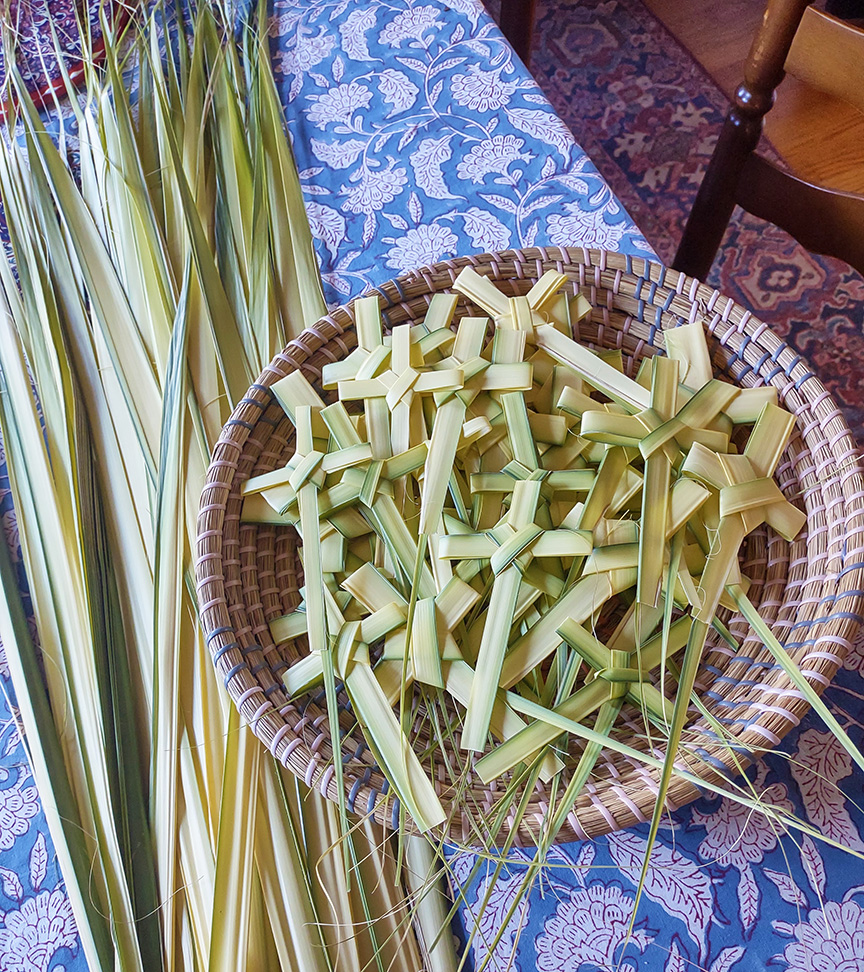
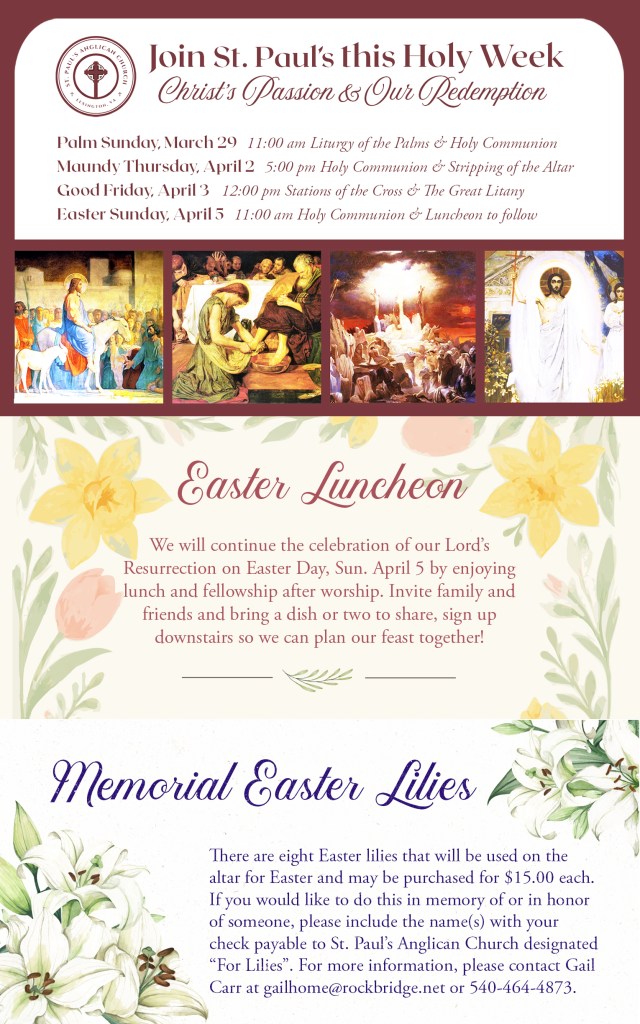
Please join us at St. Paul’s during Holy Week as we walk with our Savior Jesus Christ through His Blessed Passion and our Glorious Redemption.
Palm Sunday, March 29 11:00 am Liturgy of the Palms & Holy Communion
Maundy Thursday, April 2 5:00 pm Holy Communion & Stripping of the Altar
Good Friday, April 3 12:00 pm Stations of the Cross & The Great Litany
Easter Sunday, April 5 11:00 am Holy Communion & Luncheon to follow
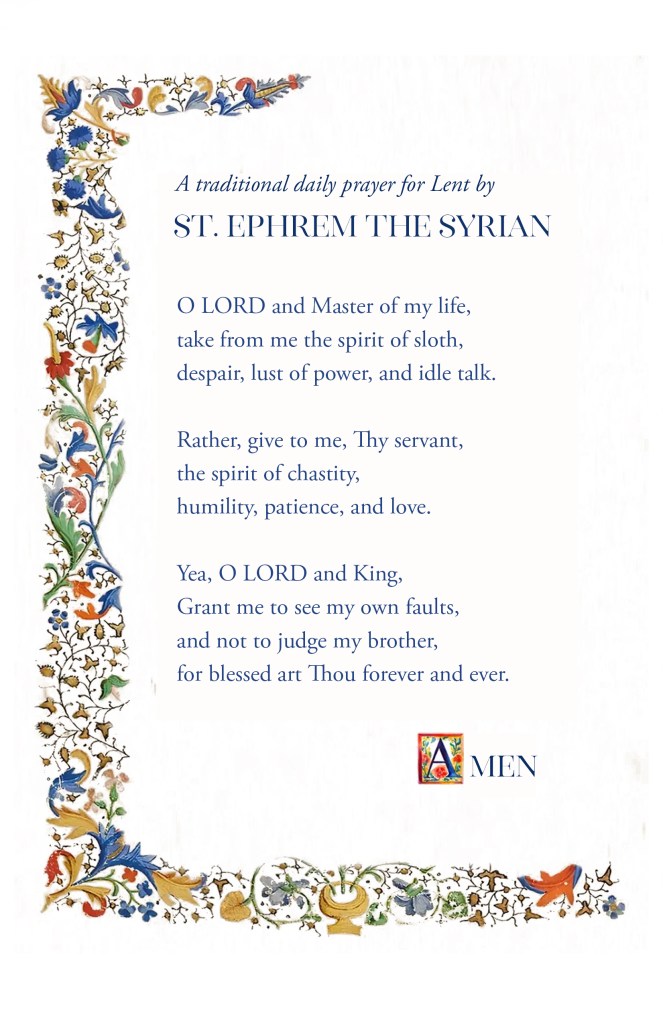
Saint Ephrem (or Ephraim) the Syrian was born around the year A.D. 306 in Nisibis, a Syrian town located in modern-day Turkey. Ephrem was baptized as a young man by Bishop James of Nisibis. He lived during a time when churches were suffering great persecution under the Roman Emperor Diocletian. He became highly respected in his hometown, but later fled with other Christians to Edessa, where he continued teaching and praying.
St. Ephrem composed more than 1000 poems and hymns, earning him the name, “Harp of the Faith.” He composed prayers, sermons in metrical form and wrote commentaries on the Old Testament and on St. Paul’s Epistles. He died in Edessa in A.D. 373 while ministering to victims of the plague. He is most famous today for “The Prayer of Righteous Ephrem,” also called “The St. Ephrem Prayer,” which is considered a classic Lenten prayer.
(adapted from an article by Bob Hostetler)
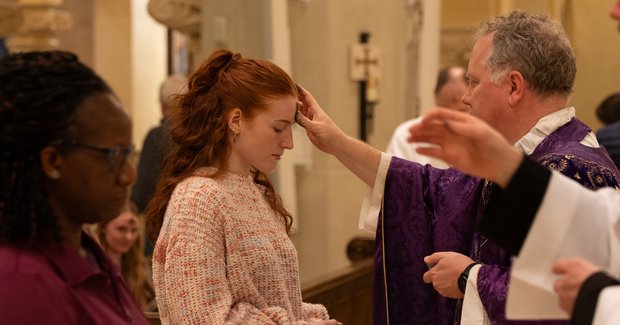
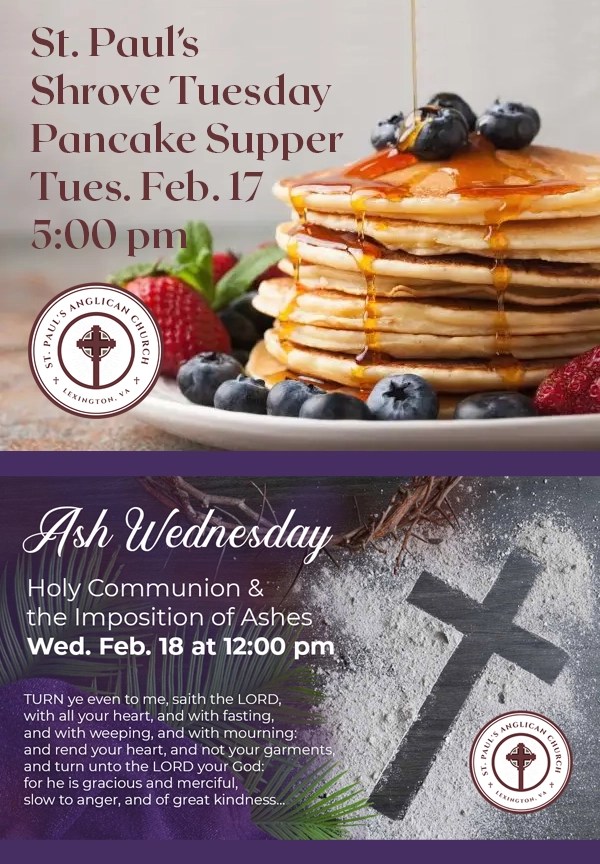
Ash Wednesday marks the beginning of the 40 days of Lent. Christians have been preparing for the celebration of Easter by walking through a “Holy Lent” since ancient times. This is patterned after Jesus’ 40 days of fasting and temptation in the wilderness. Lent is a season of repentance, fasting, and self-reflection for those who seek to enter into the mystery of the Cross with their Lord. Of course, all of this happens with the sure knowledge of God’s love and grace to us in and through Christ each step of the way.
Ash Wednesday is the day in which Christians gather to receive the imposition of ashes. Ashes on the head have signified repentance from biblical times. Job said, “I repent in dust and ashes.” Ashes also represent mourning, as Tamar in the Old Testament used them to mourn her abuse which was not her fault, but which devastated her. Ashes are the result of burning. This burning in our lives is from our own sins and from the impact of others’ sins upon us, and ashes represent both. They remind us of our broken world and that someday we will all die. We are made from dust and to dust we will return. We are called to remember Death—the most terrifying reality in human existence—not because God wants to frighten us, but so we may remember afresh in wonder the work of our Savior Jesus Christ, who defeated Death itself by his Death on the Cross.
Christians believe that God is good and that He loves us. We believe that if we are united to Christ, we are forgiven and may “boldly go before the throne of grace.” We know that even though we don’t understand exactly how God will make the wrongs of the world right, He will. And yet we live in a time in which all of those promises are not yet fulfilled. We feel the pain of sin and brokenness. Ash Wednesday and Lent remind us that we still live in this fallen world, and that we are a part of that fallenness. We are all sinners.
Lent calls us to acknowledge the reality of sin we see within ourselves, and around us, but also to set our eyes on a greater reality, that which is above and is eternal – our Savior Jesus Christ and the New Creation being prepared for those who love him. We are reminded that we too must take up our cross and follow Christ to Golgotha. Taking up our Cross is painful, but it is the only path to Resurrection.
For if we have been united together in the likeness of His death, certainly we also shall be in the likeness of His resurrection, knowing this, that our old man was crucified with Him, that the body of sin might be done away with, that we should no longer be slaves of sin. For he who has died has been freed from sin. Now if we died with Christ, we believe that we shall also live with Him, knowing that Christ, having been raised from the dead, dies no more. Death no longer has dominion over Him. Romans 6:5-9
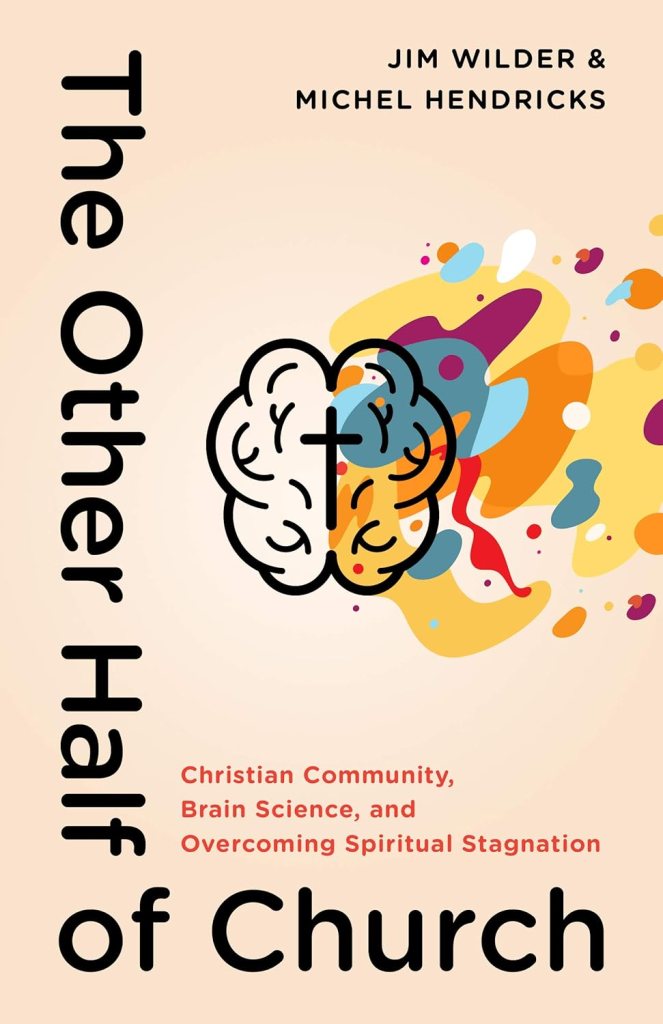
Why does true Christian transformation seem fleeting? And why does church often feel lonely, Christian community shallow, and leaders untrustworthy? For many Christians, the delight of encountering Christ eventually dwindles—and disappointment sets in. Is it really possible to experience lasting joy in Christ? Is our character really changing and growing into the image of our Savior? How do we form deep loving attachments with other Christians in a culture where people pay more attention to their screens than they do to each other?
These are some of the questions Michel Hendricks has considered both in his experience as a spiritual formation pastor and in his lifetime as a Christian. He began to find some answers he had never considered when he met Jim Wilder—a neurotheologian. Using his deep understanding of the Bible and his education in Theology combined with his training as a Psychologist in brain science, Wilder identified that there are two halves of the church: the rational half and the relational half. And when Christians only embrace the rational half, churches become unhealthy places where transformation doesn’t last and narcissistic leaders flourish.
In The Other Half of Church, join Michel and Jim’s journey as they couple brain science with the Bible to identify how to overcome spiritual stagnation by living a full-brained faith. You’ll also learn the four ingredients necessary to develop and maintain a vibrant transformational community where spiritual formation occurs, relationships flourish, and the toxic spread of narcissism is eradicated.
We have ordered printed copies of the book that can be purchased for a donation to St. Paul’s of $12 or you may purchase a kindle version online from Amazon or other retailers.
This is a book Fr. Damien & Jolie have read together several times and highly recommend to better understand how God changes our character, how we can each create a larger capacity for joy, and how we strengthen our relationship with Christ and the other people He has brought into our lives!
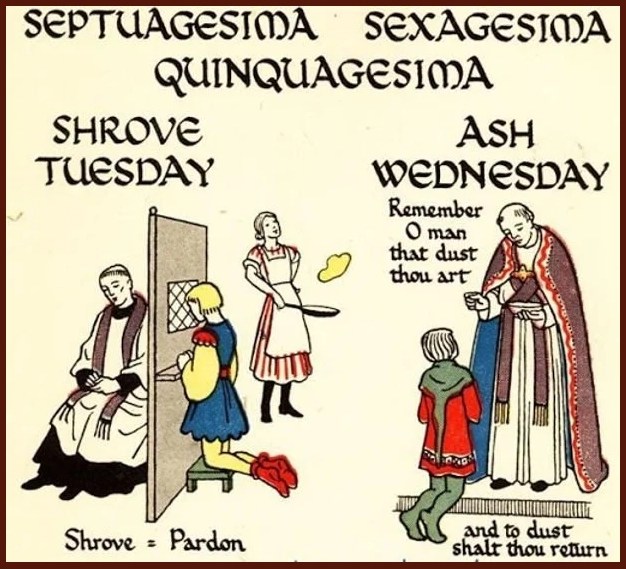
Every year midway between Christmas and Easter, we find the Sundays designated by those big “gesima” words – Septuagesima, Sexagesima, and Quinquagesima. With Septuagesima Sunday, they mark the Sundays which are 70, 60, 50 days before Easter. Quinquagesima Sunday is exactly 50 days before Easter; the others are only approximations.
There have been many joyous events these last few weeks — the Incarnation or birth of Jesus, His Naming and Circumcision, His manifestion to the Gentiles and His Baptism which revealed the Holy Trinity. We knew as we celebrated His Incarnation that He was born for us and that He would die for us. We knew as His blood was spilled in circumcision and He was presented in the Temple, putting Him under the Law, that His blood would be spilled on the Cross and become the perfect sacrifice for our sins to redeem us from the Law. We saw that the Gentile Magi who found Him had to return by a different way, as the way of all who find him must be different after finding Him. And after His Baptism, Jesus spent forty days in the desert before beginning His public ministry, wherein He will be tempted by the devil to make Himself into the various false Messiahs which fallen men still make him. We will soon imitate those 40 days to deepen our love, devotion, and union with our Lord Jesus in the season of Lent and we pray we will see more astonishing things about our Savior— and ourselves.
The gesima Sundays are a time to treasure in our hearts all the “epiphanies” we received during Christmas and Epiphanytide which bestowed upon us a wondrous vision of who Jesus is and a time to prepare ourselves for our own journey with Him into the wilderness and to the Cross. It won’t be easy, we will learn that Lent will require of us self-examination, acts of repentance and a genuine longing for a new way of being in Christ. But we will also be reminded of God’s great consolation to us in Christ, His grace and mercy, His healing Salvation and covenantal lovingkindness to all those who, by the working of the Holy Spirit, see and follow Him to the end by faith. The gesimas are a count down – 70, 60, 50 days until Man’s Salvation bursts upon Death, our last enemy, and rises to Life Everlasting.
 saintpaulslexington.com