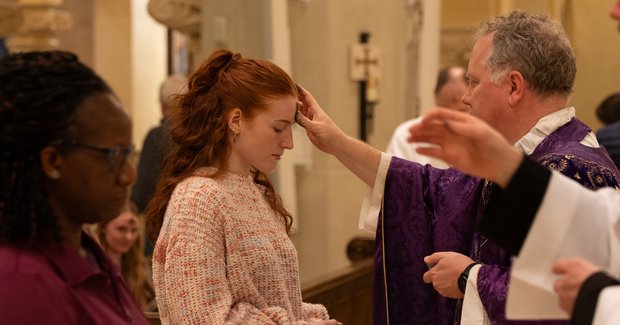
Ash Wednesday marks the beginning of the 40 days of Lent. Christians have been preparing for the celebration of Easter by walking through a “Holy Lent” since ancient times. This is patterned after Jesus’ 40 days of fasting and temptation in the wilderness. Lent is a season of repentance, fasting, and self-reflection for those who seek to enter into the mystery of the Cross with their Lord. Of course, all of this happens with the sure knowledge of God’s love and grace to us in and through Christ each step of the way.
Ash Wednesday is the day in which Christians gather to receive the imposition of ashes. Ashes on the head have signified repentance from biblical times. Job said, “I repent in dust and ashes.” Ashes also represent mourning, as Tamar in the Old Testament used them to mourn her abuse which was not her fault, but which devastated her. Ashes are the result of burning. This burning in our lives is from our own sins and from the impact of others’ sins upon us, and ashes represent both. They remind us of our broken world and that someday we will all die. We are made from dust and to dust we will return. We are called to remember Death—the most terrifying reality in human existence—not because God wants to frighten us, but so we may remember afresh in wonder the work of our Savior Jesus Christ, who defeated Death itself by his Death on the Cross.
Christians believe that God is good and that He loves us. We believe that if we are united to Christ, we are forgiven and may “boldly go before the throne of grace.” We know that even though we don’t understand exactly how God will make the wrongs of the world right, He will. And yet we live in a time in which all of those promises are not yet fulfilled. We feel the pain of sin and brokenness. Ash Wednesday and Lent remind us that we still live in this fallen world, and that we are a part of that fallenness. We are all sinners.
Lent calls us to acknowledge the reality of sin we see within ourselves, and around us, but also to set our eyes on a greater reality, that which is above and is eternal – our Savior Jesus Christ and the New Creation being prepared for those who love him. We are reminded that we too must take up our cross and follow Christ to Golgotha. Taking up our Cross is painful, but it is the only path to Resurrection.
For if we have been united together in the likeness of His death, certainly we also shall be in the likeness of His resurrection, knowing this, that our old man was crucified with Him, that the body of sin might be done away with, that we should no longer be slaves of sin. For he who has died has been freed from sin. Now if we died with Christ, we believe that we shall also live with Him, knowing that Christ, having been raised from the dead, dies no more. Death no longer has dominion over Him. Romans 6:5-9
 saintpaulslexington.com